- Published
- Reading time
- 1 min read
- Author
- FARE Editorial
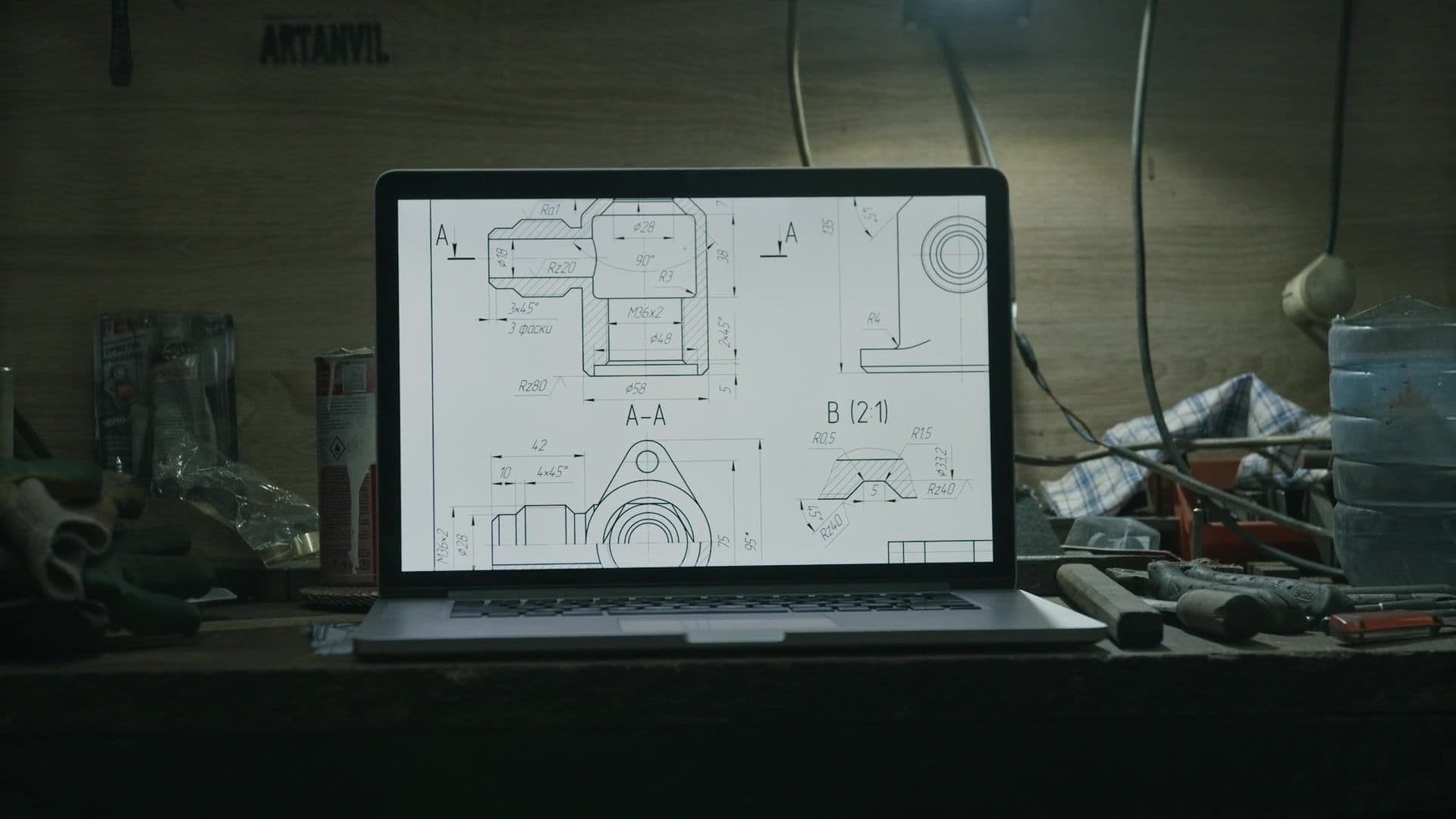
We share comparative studies of traditional CAD design times and the acceleration achieved with algorithm-assisted e-Drafting modeling, with test data and certified metrics.
Every engineering department we meet has the same problem: a backlog of drawings, revisions and documentation that grows faster than the team can clear it. New products wait for drawings, suppliers wait for updated revisions, and senior engineers spend their time on routine drafting instead of design.
This benchmark compares two ways of working through the same set of tasks: 2D production drawings, 3D models of mechanical assemblies and the related technical documentation. One path follows a traditional in-house CAD workflow. The other uses e-Drafting, our outsourced service in which engineers work with AI-assisted modelling tools.
The difference is not that the software draws on its own. It is in the repetitive steps around each drawing: setting up views, applying standards, checking consistency between parts and producing revisions. Automating those steps lets the engineer focus on the decisions that actually need engineering judgement, and it makes turnaround times predictable.
Predictability matters as much as speed. With delivery times guaranteed in the contract, a technical department can plan product launches and supplier requests around a known date instead of an estimate. That is what turns a faster drafting process into a shorter time-to-market.
The full benchmark describes the test set, the method and the results for each type of task, so that you can compare them with your own workload. If you want to run the same comparison on your drawings, the e-Drafting benchmark test is part of the Value Chain Health Audit.